
Pawp: 24/7 Vet & Pet Care
Pawp, Inc.Medical
4.71.29K Reviews
- Version
- Varies With Device
- Installs
- 100.00K
- Age Rating
- Everyone
Screenshots

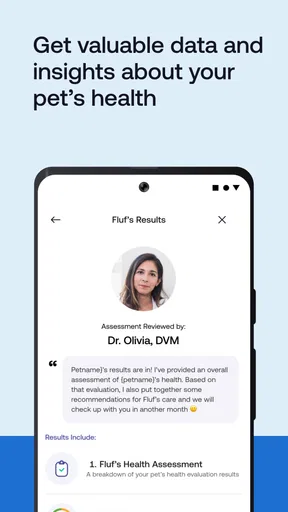
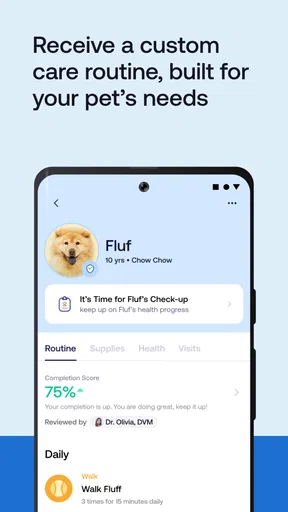
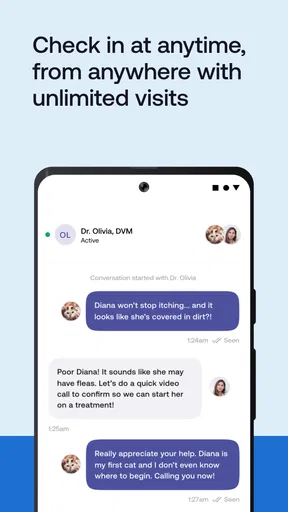
Our Review of Pawp: 24/7 Vet & Pet Care
 Analysis by Appyee
When a pet starts acting strangely, the hardest part is often deciding how urgently to respond. I have used Pawp: 24/7 Vet & Pet Care as a first-stop medical app for those uncertain moments, and I see its main value in helping owners think clearly before choosing between home observation, a regular clinic, or emergency care. It is a free medical app from Pawp, Inc., designed around live veterinary support by text and video rather than a simple library of articles.
That distinction matters. Pawp is not something I would treat as a replacement for a physical examination, but it can make the gap between “something seems off” and “I know what to do next” much less stressful. The app is available to an Everyone audience, and its current store presence shows a 4.7 average from around six thousand ratings, with more than one hundred thousand installs. Those figures suggest that many owners are using it as an accessible support tool, not merely downloading it out of curiosity.
How I Decide Whether Pawp Is the Right First Step
My first decision criterion is urgency. If a pet is having trouble breathing, has suffered serious trauma, is unconscious, or appears to be in immediate danger, I would not spend time trying to solve the situation through an app. I would contact an emergency veterinary service directly. Pawp is more useful when the situation is worrying but not obviously life-threatening: a new symptom, a question about behavior, uncertainty after a minor incident, or concern about whether a problem can wait until a normal appointment.
The second criterion is the kind of answer I need. Search engines can provide a long list of possible causes, but they rarely help me weigh those possibilities against the animal’s age, behavior, history, and current condition. Pawp’s live text and video format is better suited to a conversation. I can explain what I noticed, answer follow-up questions, and show something visually when words are not enough. That human exchange is the app’s central advantage.
The third criterion is preparation. I get more from a remote veterinary conversation when I gather useful details first: when the symptom began, whether it is getting worse, changes in eating or drinking, bathroom habits, energy level, recent food or medication, and any photo or video that captures the issue. This is one of the less obvious ways to improve the experience. Opening the app immediately and typing “my pet is sick” creates a vague starting point; a short timeline gives the veterinarian something practical to assess.
I also consider whether I need diagnosis or direction. A remote conversation may help me understand the next sensible step, but it cannot provide every part of an in-person examination. Some concerns depend on palpation, laboratory work, imaging, or treatment that must happen at a clinic. I use Pawp best when I regard the conversation as triage and guidance, not as permission to ignore symptoms that persist.
What the First Conversation Feels Like
The app’s store summary focuses on live support by text and video, and that is the experience I would choose it for. Text is convenient when I am in a quiet place, when the issue is easy to describe, or when I want to keep a written record of the exchange. Video becomes more valuable when movement, breathing, posture, skin, or behavior is difficult to explain. Switching between those forms of communication can reduce the back-and-forth that often happens in ordinary messaging.
I would keep the pet nearby, make sure the room is well lit, and avoid trying to stage a behavior that might make the animal anxious. A brief natural video is usually more useful than a long explanation of what the pet “normally” does. If the symptom comes and goes, recording it beforehand can be especially helpful. This workflow is practical for owners who notice an issue outside normal clinic hours, although I would still treat a worsening condition as a reason to seek direct care rather than waiting for a remote exchange.
Another useful habit is writing down the veterinarian’s suggested next step before ending the conversation. In a stressful moment, it is easy to remember only the reassuring part and forget the monitoring instructions. I would note what to watch, how soon to act if it changes, and whether a local appointment is still needed. That makes Pawp more useful as a decision aid instead of a one-time reassurance button.
Where the App Wins Over Familiar Alternatives
Compared with general web searches, Pawp wins on context. A search page can be fast, but it tends to mix mild and severe explanations without knowing which details apply to my pet. That can lead either to unnecessary panic or false reassurance. A live veterinary conversation gives me a chance to clarify the exact situation, which is much closer to the reasoning process I want when symptoms are ambiguous.
Compared with a standard clinic appointment, the app wins on immediacy and convenience for questions that do not clearly require hands-on care. I do not need to travel simply to ask whether a change deserves monitoring or a scheduled visit. This can be particularly helpful for people who live far from a clinic, have transportation difficulties, care for several animals, or notice a concern late in the day.
Compared with a static pet-care guide, Pawp wins when the problem does not fit neatly into a predefined article. Guides are useful for learning general care, but they cannot ask me whether the pet is still eating, whether the symptom appeared after a new product, or whether the animal’s behavior has changed. The ability to respond to those details is what makes this app feel more purposeful than a searchable collection of tips.
The strongest use case I found is the “should I wait?” moment. For example, if my cat suddenly vomits once but then seems comfortable, I may want help deciding what observations matter over the next several hours. If my dog develops a small irritated area and keeps licking it, I may need guidance on whether to arrange a routine visit or act sooner. In both cases, Pawp can help organize the decision. It does not make the underlying condition harmless, but it can make my next action more informed.
Where Another Option May Be Better
There are situations where I would choose a different route immediately. A physical clinic is better when the pet needs examination, testing, injections, wound care, dental work, or a treatment plan based on findings that cannot be assessed remotely. An emergency hospital is better when the condition appears severe or rapidly deteriorating. Pawp should not become a delay between recognizing danger and getting hands-on help.
A regular veterinarian is also the stronger option for ongoing care. The local clinic can build a full history, examine the animal over time, manage prescriptions, and coordinate preventive care. A remote conversation may help me prepare for that appointment, but it does not create the same continuity. If I already have a trusted veterinary practice, I would use Pawp alongside it rather than trying to replace it.
Some owners may prefer a conventional phone call, especially if they already know which clinic to contact. That can be simpler when the question concerns an existing diagnosis or a treatment instruction from the pet’s own veterinarian. Pawp is most compelling when access, timing, or uncertainty is the obstacle. If none of those is a problem, the familiar local route may be more direct.
I would also skip the app as a primary solution if I am looking for broad training advice, nutrition research, grooming instruction, or a complete preventive-care planner. Veterinary support can inform those subjects, but a live consultation is not automatically the most efficient tool for every pet-related question. The app earns its place when I need individualized medical direction rather than general reading.
The Practical Cost of Changing How I Seek Advice
Because Pawp is free, the financial barrier to trying it is low. The more important cost is behavioral: I have to describe the problem clearly, stay available for the conversation, and follow through on the recommendation. Remote support is only useful if I provide accurate information and remain willing to visit a clinic when the situation calls for it.
There is also a risk of false comfort. Hearing that a symptom may be monitored can feel like a final answer, even when the advice depends on the pet remaining stable. I would treat any monitoring plan as conditional. If the animal becomes less responsive, stops eating or drinking, shows increasing pain, or develops a new worrying sign, I would reassess quickly instead of relying on the earlier conversation.
The opposite problem is unnecessary escalation. A live discussion may reveal that a concern deserves attention sooner than I expected, which can mean arranging transport, changing plans, or paying for a clinic visit. I do not see that as a failure of the app. A useful triage tool should sometimes tell me that remote advice is not enough. The trade-off is that the app may save an unnecessary trip in one case and prompt a necessary trip in another.
Before relying on it, I would also make sure I understand how I want to use text versus video. Text is less disruptive and works well for a clear sequence of events. Video is worth the extra effort when the veterinarian needs to see the pet’s condition directly. Preparing the camera position, lighting, and a calm space is a small step, but it can make the exchange much more productive.
Small Workflows That Make Pawp More Useful
My preferred workflow is to create a compact symptom note before starting: the first time I noticed the issue, what changed afterward, and what the pet is doing right now. I would add recent food changes, possible exposure to household products, and any medication or supplement. This prevents me from forgetting relevant details once the conversation begins and helps separate facts from assumptions.
I would use video selectively rather than keeping it open constantly. If the concern involves gait, breathing, scratching, coughing, or unusual behavior, a short clip can communicate more than several paragraphs. If the issue is a question about timing or appetite, text may be enough. Choosing the communication mode based on the evidence I need to show is a simple but important trade-off.
For recurring problems, I would keep a dated record of symptoms and advice. That record can help me notice patterns and can also make a later in-person appointment more efficient. Pawp therefore works best as one part of a broader care routine: consultation when uncertainty appears, observation afterward, and local veterinary care when the problem persists or requires examination.
Another practical tip is to include the pet’s normal behavior in the explanation. “Not eating” means something different for an animal that usually eats immediately than for one that grazes slowly. “Hiding” means something different for a naturally shy cat than for a social cat that suddenly withdraws. Those comparisons give the veterinarian a baseline and reduce the chance that a small but meaningful change gets lost in a generic description.
Who I Would Recommend It To
I would recommend Pawp to pet owners who want a convenient way to discuss uncertain symptoms before deciding what kind of care is appropriate. It is especially appealing to people who cannot easily reach a clinic, owners of anxious pets who may become distressed during unnecessary travel, and anyone who wants a veterinary perspective rather than relying on alarming search results.
It can also be useful for a new pet owner who is still learning what counts as normal. The app does not remove the need to learn basic care, but a conversation can help turn a confusing observation into a clear plan. Owners managing multiple pets may appreciate being able to explain which animal is affected and compare the change with that individual’s usual habits.
I would not recommend using it as the only veterinary relationship for a pet with chronic illness, complex medication needs, or a condition requiring regular physical monitoring. Those animals benefit from continuity with a clinic that can examine them and maintain a detailed medical history. Pawp can still be a helpful supplementary opinion, but the local veterinarian should remain central.
My Recommendation After Weighing the Trade-Offs
My overall view is positive, with a clear boundary: Pawp is a strong first layer of veterinary support, not a universal substitute for a clinic. Its free access, live text and video format, and focus on practical next steps make it more useful than a generic symptom search when I am unsure how seriously to take a change in my pet.
The app comes from Pawp, Inc., and its release on June 28, 2022, places it among the newer ways to bring veterinary guidance into an everyday phone workflow. Its Everyone age rating also makes it approachable for a broad range of household users. I would download it before an uncertain situation occurs, not after, so I could become familiar with the interface and have a plan for collecting useful details.
My recommendation is to use Pawp as a calm triage companion while keeping a local veterinary clinic as the authority for examination and treatment. If you understand that distinction, the app can save time, reduce guesswork, and help you decide when a concern deserves immediate attention. If you need hands-on care, emergency treatment, or long-term medical management, I would choose the appropriate physical service instead.
For me, that balance is what makes Pawp: 24/7 Vet & Pet Care worth trying. It does not promise to solve every pet-health problem from a screen, and I would be cautious of anyone expecting that. What it does offer is a more informed next step at the moment when uncertainty is usually the most difficult part of caring for an animal.
Privacy and Permissions
See what permissions an app requests and how it handles your data.
- Calendar
- add or modify calendar events and send email to guests without owners' knowledge
- Photos/Media/Files
- read the contents of your USB storage, modify or delete the contents of your USB storage
- Storage
- read the contents of your USB storage, modify or delete the contents of your USB storage
- Camera
- take pictures and videos
- Microphone
- record audio
- Wi-Fi connection information
- view Wi-Fi connections
- Other
- view network connections, full network access, change your audio settings, run at startup, prevent device from sleeping, Google Play license check
Verdict
Strengths of Pawp: 24/7 Vet & Pet Care
- 24/7 access to licensed veterinary professionals by video or chat
- Helpful for quick guidance when your pet shows mild or worrying symptoms
- Unlimited consultations can offer reassurance between regular vet visits
- Covers dogs and cats with advice tailored to common pet concerns
- May help reduce unnecessary emergency-clinic visits and related costs
Limitations of Pawp: 24/7 Vet & Pet Care
- It cannot replace hands-on examinations, testing, or in-person veterinary treatment
- Response quality may vary depending on the veterinarian and case complexity
- A stable internet connection and working camera are needed for video visits
- Prescription availability and treatment options can be limited remotely
- Membership pricing may not be worthwhile for households needing rare consultations
Similar Picks in This Category
View All
WebMD: Symptom Checker
WebMD, LLC4.1

Microphone Amplifier
DOSA Apps4.2

Anatomy Learning - 3D Anatomy
3D Medical OU4.5

Period Tracker and Calendar
SimpleInnovation4.9

GoodRx: Prescription Coupons
GoodRx4.8

CVS Health
CVS Pharmacy4.5
Frequently Asked Questions
What is Pawp: 24/7 Vet & Pet Care, and how does it work?
Pawp is a digital pet-care service that connects eligible members with veterinary professionals through virtual consultations and support. After creating an account and providing information about your pet, you can use the app to discuss symptoms, ask health-related questions, and receive general guidance. It is designed for convenient advice and reassurance, but it does not replace a complete in-person examination when hands-on care is necessary.
Can Pawp diagnose my pet or provide treatment and prescriptions?
Pawp’s veterinary team can discuss your pet’s symptoms, review the information you provide, and help you understand possible next steps. However, the type of diagnosis, treatment recommendation, or prescription available may depend on local veterinary regulations, the consultation details, and whether a veterinarian has an established relationship with your pet. The service should not be considered a substitute for a physical examination or ongoing care from your regular clinic.
Is Pawp available for emergencies?
Pawp may help you assess a concerning situation and explain whether immediate veterinary attention could be appropriate, but virtual support should not be relied upon for life-threatening emergencies. If your pet has trouble breathing, severe bleeding, collapse, poisoning, seizures, serious injury, or another rapidly worsening condition, contact an emergency veterinary hospital immediately. The app can be useful for guidance, but it cannot provide hands-on stabilization or emergency treatment.
What pets can use Pawp, and what information should I provide?
Pawp is primarily intended for common household pets, such as dogs and cats, although eligibility and available services can vary by membership and location. Before starting a consultation, provide accurate details about your pet’s age, breed, weight, medical history, medications, allergies, symptoms, and recent behavior. Clear photos or videos may also help the veterinary professional understand the situation, but they cannot always replace an in-person examination.
Does Pawp cost money, and what should I check before downloading it?
Pawp is generally offered through a paid membership or subscription, and pricing, trial availability, included benefits, and cancellation terms may change over time or differ by region. Before signing up, review the current information in the official app store listing and Pawp’s membership terms. Also check whether virtual consultations, emergency assistance, insurance-related benefits, or other features are included in your specific plan.
